Property Tips by Chartered Surveyors from the Haynes House Manual series
The Illegally Demolished Semi-Detached House
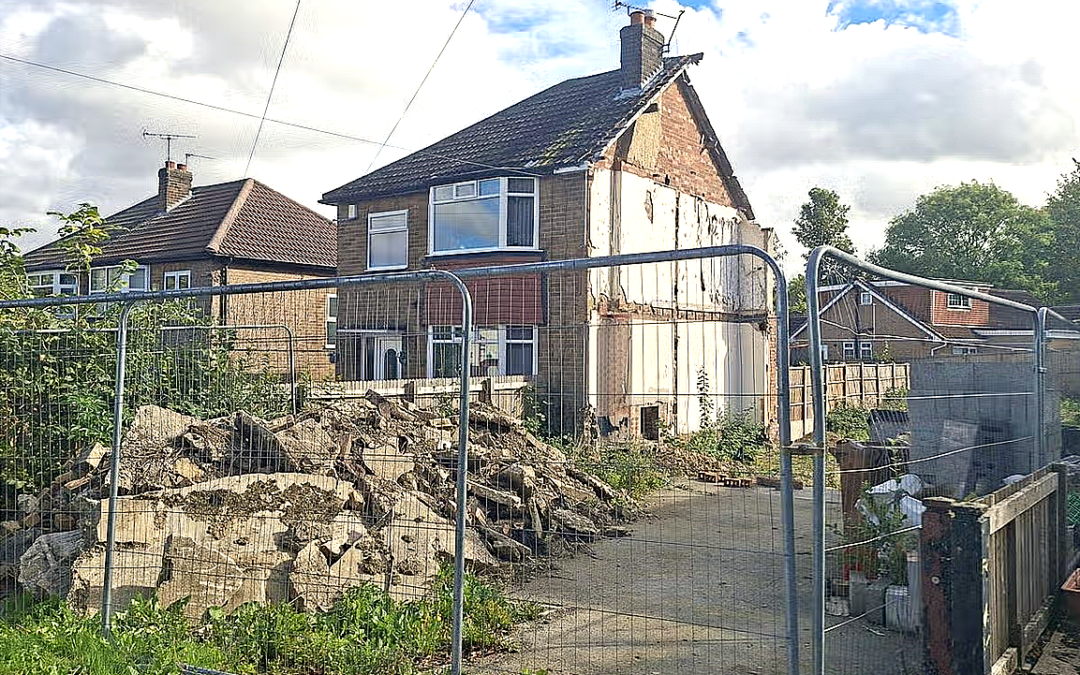
In 2021 Shivarna Mitra bought a semi-detached house in Leeds and moved in with her mother and young son. The following year the adjoining house next door was also sold. Shortly afterwards the new owner, Mr Rhodes, began constructing an extension.
But the building work encountered a period of severe weather that resulted in a change of plans. Rather than constructing the extension as originally intended, much to his neighbour’s horror Mr Rhodes set about completely demolishing his house.
By law, demolition must be carried out with planning permission (in most cases) and a Section 80 demolition notice. But Mr Rhodes failed to obtain the necessary consents. He claimed that the demolition work needed to be carried out on the grounds that storm damage had compromised his gable wall and hence the safety of the building.
Following the unauthorised demolition, the owner subsequently sought retrospective permission for the work and for a larger replacement house, but the application was turned down.
The demolition of the adjoining house left Ms Mitra’s party wall exposed to wind and rain. She claimed that this resulted in damp, mouldy walls, a damaged roof and soaring heating bills, and also allowed pests to enter her home, rendering her property unsaleable.
Following the demolition, Local Authority Building Control officers visited the site and concluded Mitra’s house was structurally sound. They recommended weatherproofing the partition wall, and passed the advice on to the site owner who had instructed the demolition. But the work the Council requested was never carried out.
Update: Demolition of the adjoining semi-detached house left Ms Mitra’s home unmortgageable and unsaleable. The resulting legal and insurance claims have dragged on for several years.
The plot of land previously occupied by the demolished house next door has now been sold and permission to build a replacement property has been granted.
Chartered surveyors’ advice on demolition
Party walls are constructed as internal walls dividing two adjoining houses, and are not designed to be weather resistant. So when one half of a pair of semi-detached houses is demolished, depending on how the work is carried out the remaining semi-detached house will be at risk of structural damage as well as a number of serious environmental issues.
The key legal points in this case are as follows:
Planning & Building Regulations
Demolishing a residential property normally requires notifying the Local Authority under Section 80 of the Building Act 1984 . Failure to gain consent will normally lead to enforcement action.
If demolition work is classed as ‘development’ then planning permission is normally required. Even where a building is deemed unsafe, planning permission is still required for demolition if the reason it became unsafe was due to the action (or inaction) of any individual with any interest in the land, and couldn’t be made safe by temporary support or repair.
The Party Wall Act
Semi-detached and terraced houses by definition share a party wall. Demolishing the house on one side of a party wall will compromise the structural support, weatherproofing, and fire safety of the remaining half.
Failure to comply with the Party Wall Act means the aggrieved neighbour can take legal action to obtain an injunction and claim damages in respect of works for which notice should have been served.
Liability
The person who carries out unauthorised demolition can be held legally liable for remedial structural work, general repairs and the significant loss of value suffered by remaining adjoining properties.
See Rightsurvey.co.uk for a quick guide to valuation and survey prices
We would always recommend using RICS certified surveyors in every instance – don’t get caught out, get instant quotes for RICS surveyors here.